¶ STANDARD MATERIALS
All building standard materials used in spaces maintained by 1CALL are determined by facilities maintenance. Request for a variance to the building materials standards, which are listed below, will be reviewed on a case-by-case basis.
- Ceiling tiles are 2x2 or 2x4 acoustic, fire retardant, drop-in grid. Each space in each building conforms to the building code.
- Flooring is chosen by space use. All carpet and commercial tile conform to applicable building and fire codes.
- Paint selections for each building are pre-approved. These selected requirements are provided in a book layout, which is available to the public in the 1CALL office. To view the options for your space, please submit a request using 1CALL Cloud, https://1call.cloud.
¶ HANGING ITEMS
- Please refer to the Signage section within the Help Docs site for additional information: Signage on Help Docs
¶ HOLIDAY DECORATION GUIDELINES
¶ DURATION
- Decorations must be removed no later than seven (7) working days following the end of the holiday. The seven day period begins on the working day immediately following the assigned holiday date.
¶ ALLOWABLE ITEMS
- Freestanding decorations, such as Christmas tress, are allowed as long as the following requirements are met:
- Decorations must not block corridors, entries, exits, or pathways.
- Decorations must not block the view of exit signs or any other life safety device (i.e., fire extinguisher, pull station, horn/strobe, sprinkler head, or piping, etc.)
- Any trees, wreaths or other greenery must be artificial and Underwriters' Laboratories (UL) flame retardant rated. Documentation on the UL rating must be maintained for reference.
- Decorative items placed on, or within, an artificial tree or wreath shall be securely fastened to avoid becoming a hazard.
- The vertical surface and the top areas of the reception desk may be decorated as long as the following adhesive products are used, and they do not interfere with normal clinical operations or the means of egress:
- 3M Command brand removable adhesives
- tacky strips
- Removable painters tape
- All other removable adhesive types must be approved through 1CALL Facility Services.
- Holiday lighting is allowed as long as the following requirements are met:
- The lighting must be LED, UL rated, and in perfect working condition.
The lighting strand must identified as "indoor use."
- All light strands should be inspected to ensure there are no loose sockets or wires that are frayed/damaged.
- Strand wiring should not be altered in any way from the original configuration.
- Up to ten (10) strands of LED lights may be connected together, unless the manufacturer's recommendations specify fewer.
- Strands may be plugged directly into a power outlet.
- One UL-rated surge protector power strip is allowed.
- All holiday lighting shall be turned off prior to leaving at the end of the workday. This shall be done manually or with assistance from a programmable timer.
- There are holiday options for the digital displays. These options may be provided upon request.
¶ PROHIBITED ITEMS
- Holiday lights and/or electric ornaments in corridors or over exit doors.
- Holiday lighting that contacts combustible material. (Paper, packages, cloth, etc.)
- Holiday lighting attached to walls or molding with prohibited adhesive products (see below).
- Holiday decorations on any doors or door frames.
- Holiday decorations that are unsafe for young children:
- Ornaments with sharp edges or small parts.
- Decorations that are breakable, edible, or appear edible.
- Decorations secured with hooks (choking hazard).
- Decorations on vertical surfaces shall be secured using approved methods in away that does not allow them to fall or become dislodged from the surface.
- Decorations, signs, banners, etc., hung from ceiling tiles, light fixtures, or the ceiling tile grid. Items hung in this way compromise the ceiling's fire protection system.
- Decorations are prohibited within 18 inches of a sprinkler head.
- Fire extinguishers and pull stations must maintain a three (3) foot spatial clearance.
- Regular adhesive tape, packing tape, tacks, staples, pushpins, nails, or any fastener that compromises or disfigures the surfaces.
- Natural items (cut or alive), such as ropes, wreaths, or trees. This includes hay, straw, bamboo, dry moss, wood bark, dry leaves, corn stalks, corn shucks, saw dust, tumbleweeds, and cotton batting.
- Flammable powders or liquids.
- Confetti, plastic sheeting/pellets, flock, artificial snow, paper or streamers.
- Candles, flames, or other spark producing items. Electric or battery powered candles may be used.
- Hot wax scent devices and other scent producing devices.
- Metallic trees.
- Smoke producing devices.
- Spray-on flame retardants.
- Extension cords.
- Multiple power strips connected together in a "daisy chain."
- Power cords placed across areas of foot traffic.
- Overloaded electrical outlets.
- Use of the Red emergency equipment outlets.
¶ MOVING SERVICES
- 1CALL Facilities Services can provide contract-moving services at departmental expense.
- Please have your Authorized Requestor submit a request for moving services on 1CALL Cloud, https://1call.cloud.
- 1CALL Facilities Services will meet with you to identify what needs to be moved and will submit a quote to the requesting department for approval.
- Upon receipt of departmental budget approval, 1CALL Facilities Services will schedule moving services with the department.
- All furniture owned by the University Hospitals Authority or University Hospitals Trust cannot be moved or relocated. If you see an asset tag labeled “Property of UHA” or “Property of UHT” on any furniture and need it removed, please submit a move request on 1CALL Cloud, https://1call.cloud.
¶ PEST CONTROL
To ensure a safe and sanitary environment, all pest control concerns must be submitted through a formal work order request. Requests may be submitted via 1CALL Cloud or by calling our office at (405)271-CALL (2255).
- Tenants are required to provide a clear photo of the pest, droppings, or affected area and upload the image to the work order.
- This documentation allows our team to properly assess the situation and determine the appropriate next steps.
- Each pest control concern will be evaluated on a case-by-case basis, as not all situations require chemical treatment or room spraying.
- If treatment is deemed necessary, we will coordinate directly with our contracted pest control provider to resolve the issue.
- Please note that in cases involving bedbugs, the affected room must remain off-limits and unoccupied for a minimum of four (4) hours following treatment to ensure the safety and effectiveness of the application. The room may be reopened once post-treatment cleaning has been completed by our staff.
¶ ROOM TEMPERATURE REQUIREMENTS
- Heating set point is 70°F.
- Cooling set point is 73°F.
- HVAC equipment will turn off at the end of each area’s daily contractual occupied hours.
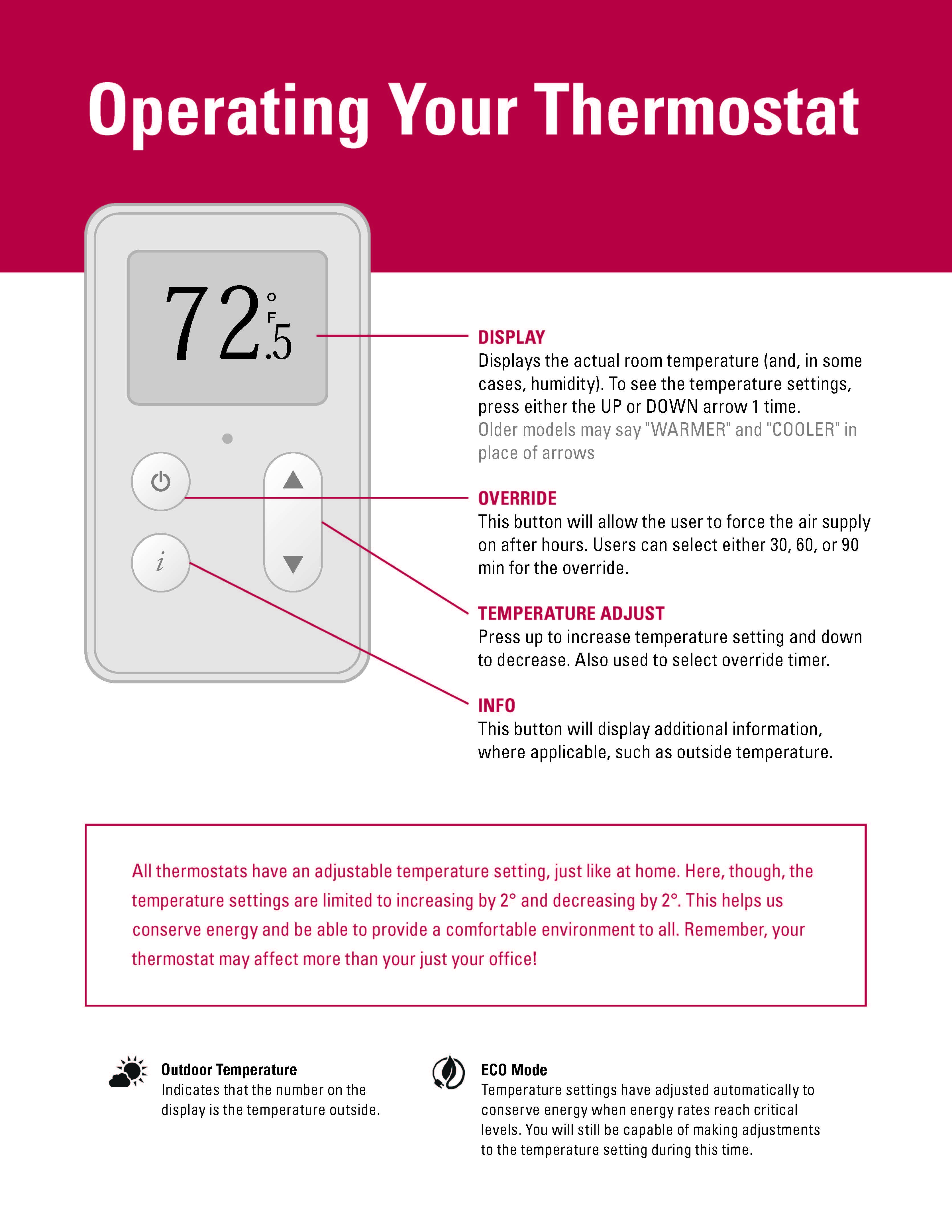
- Tenants will have a 4° adjustment range (2° up and 2° down) at each thermostat unless it is in a transitional space (i.e. hallways, elevator lobbies, atriums).
- Areas that are too hot/cold should be reported as soon as possible to your Authorized Requestor (AR) so they can place a work order in 1CALL.Cloud.
- This will allow our technicians to personally inspect tenant spaces to determine the root cause of the comfort issue.
- Space Heaters are not allowed in UHAT-owned facilities unless provided by a 1CALL Technician.
¶ THERMOSTAT OPERATION
- Please reference the “Thermostat Override” document below.
¶ SPACE HEATER POLICY
Our Commitment to Your Comfort
At UHAT and 1CALL, we work hard to keep you comfortable while maintaining a safe environment. While we know temperature concerns can be frustrating, safety must come first in our healthcare facilities.
¶ WHAT'S NOT ALLOWED
- Personal space heaters of any kind
- Any heating devices in:
- Laboratories
- Storage rooms
- Exam rooms
- Patient rooms
- Treatment rooms
- Hospital spaces
- Certified ambulatory spaces
- Areas requiring specific temperature control
¶ WHAT'S ALLOWED
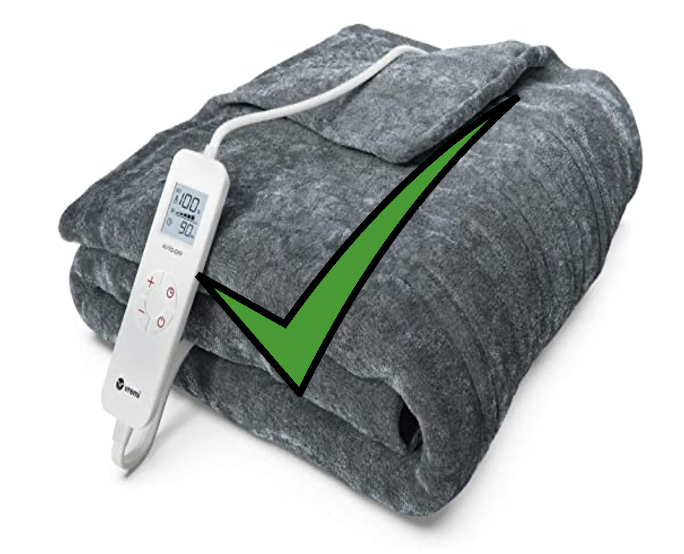
- Heating blankets
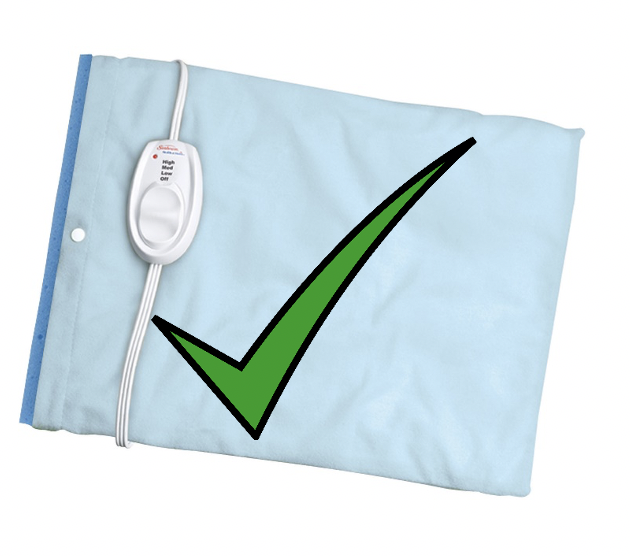
- Heating pads
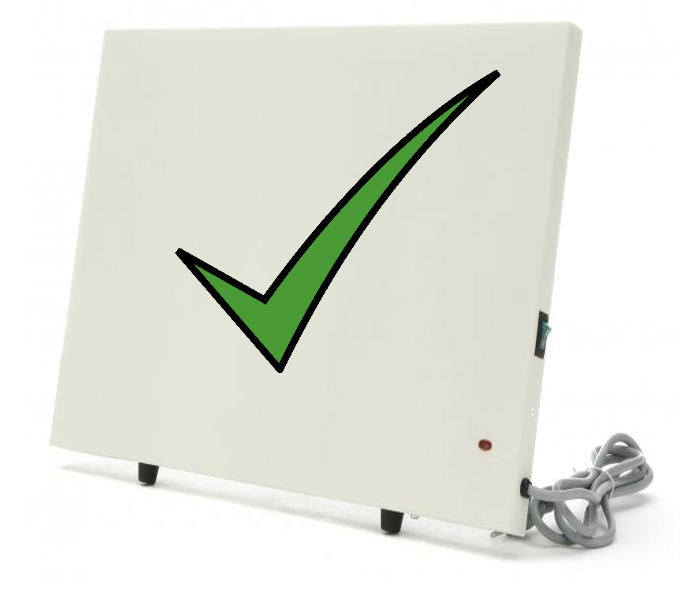
- Heating radiation panels under 200 watts
- Temporary space heaters provided by 1CALL (only in approved areas)
- See below for a table of acceptable items with requirements:
| Items | Requirements |
| Space Heater | Personal space heaters of any kind are not permitted. |
| Heating Blanket or Pad |
|
| Radiant Heating Panel |
|
¶ IF YOU'RE TOO COLD
- Contact your department’s Authorized Requester (AR) to submit a work order through 1CALL Cloud:
- Go to: 1CALL Cloud website (1call.cloud)
- Select: Maintenance > Heating/Cooling > Too Hot or Too Cold
- If we can't fix the temperature quickly:
- 1CALL may provide a temporary space heater
- The heater will have a 1CALL authorization sticker
- 1CALL will remove the heater once temperature issues are fixed
Why This Matters
- Space heaters can create fire hazards
- They can overload electrical systems
- They interfere with building temperature controls
- They work against our energy conservation efforts
- They violate Joint Commission and Life Safety codes
¶ POLICY VIOLATIONS
First Violation:
- You'll receive a warning memo
- Must remove unauthorized heater within 5 business days
Second Violation:
- You'll receive a second warning memo
- Must remove unauthorized heater within 2 business days
Need More Information?
See the Room Temperature Requirements section in the Help Docs for details about our standard temperature settings.
¶ BUILDING MAINTENANCE DAYS
Building maintenance such as fire alarm testing, deep cleaning of carpet, deferred maintenance, etc. will be conducted on a quarterly basis. 1CALL Facility Services will contact you in advance if your area will be affected.
¶ UTILITY FAILURES AND OTHER EVENTS
¶ POWER OUTAGE
- Between 8:00 a.m. and 5:00 p.m., notify 1CALL Facility Services at (405) 271-CALL (2255). Phones may not be operating properly. If there is no answer, please send a messenger to the 1CALL office in the basement of Garrison Tower, Suite B100.
- After hours, notify the 1CALL office at 271-CALL (2255).
- If evacuation of the building is required, exit via stairways. Do not use elevators. Seek out disabled persons and provide assistance.
- Laboratory personnel should secure experiments or activities that may present danger with the electrical power off or when it is restored unexpectedly. Notify the lab supervisor immediately. For specific emergencies after hours, contact Campus Police at 271-4911.
- When mechanical ventilation is interrupted, vapors of chemicals may reach hazardous concentrated levels. Do not perform procedures using hazardous materials until power is restored. Clean up or put away chemicals and close containers.
¶ STEAM LINE FAILURE
- In the event of a steam line failure, call 1CALL Facility Services at (405) 271-CALL (2255).
- Evacuate the area as soon as possible by taking exits that avoid the steam leak.
¶ FLOODING
- If flooding occurs because of a plumbing failure or other problem, stop using all electrical devices.
- Notify 1CALL Facility Services at 271-CALL (2255).
- If necessary, evacuate the building.
¶ GAS LEAK
- Cease all operations immediately.
- Do not switch lights on or off.
- Evacuate as soon as possible, notifying others as you go
- Leave the area to call Campus Police at 271-4911. Use a cellular phone or one of the blue emergency phones on Campus.
- Do not re-enter the building until cleared to do so by Campus Police or other proper authorities.
¶ ELEVATOR ENTRAPMENT
- Tell the passengers to stay calm and that you will get help
- If you are trapped, use the emergency phone in the elevator or push the alarm button and wait for help.
- During normal hours (8:00 a.m-5:00 p.m.), call 1CALL Facility Services at 271-CALL (2255). After hours, call Campus Police at 271-4911.
- Try to keep the trapped passengers calm. Talk to them until a Campus Police Officer or other help arrives.
¶ EXTERIOR PROPANE HEATER USAGE
¶ Note: The use of open flame heaters within UHAT facilities is strictly prohibited.
¶ DANGER |
¶ CARBON MONOXIDE HAZARD
|
| MODEL NUMBER | MANUFACTURER |
| NCZH-G-SS | Hampton Bay |
Request and Placement Procedure
- Notice open flame heaters pose a serious fire hazard. These devices possess an exposed flame heat source capable of igniting combustible materials.
- Placement at approved locations must be reviewed and approved by local safety officials and acknowledged by the Authority Having Jurisdiction (AHJ).
- Open flame space heaters are not allowed within the interior of the building. Use of an open flame heat source within a building poses a serious risk to the life and safety of building occupants.
- Approval for use at the exterior of UHAT facilities is regulated through the AHJ and 1CALL Facility Management.
- Identification of open-air areas that are not enclosed are listed below:
|
Table 1 |
|
| Building Location | Exterior Area |
| AAT / COM | Entrance |
| AAT / COM | 4th Floor Patio |
| Atrium | Patio |
| Atrium | Valet Parking |
| Nicholson | Valet |
| OTC | Valet |
- Request and approval are achieved through a Hot Work Permit.
- A 72-hour notification is required for the placement of an open flame heat source.
- All open-flame heat sources must be accompanied by Class A fire extinguisher.
- Open flame heat sources must be ten (10) feet away from any egress or exit area.
- Approval of the hot work permit will authorize the 1Call Facility Services to place an open flame heat source in the approved designated areas.
- The area of requested use must be documented on the Hot Work Permit.
- Hot work approver must review use location, temperature, and wind forecast prior to approving the placement of heater.
- Host is required to certify that they understand the risk associated with the open flame heat source.
- Host must demonstrate the ability to shut off the patio heater if unexpected events occur.
- Host will turn off patio heater when the outdoor temperature exceeds 60°F.
- Host will turn off patio heater and notify 1Call when daily use is complete.
Support Procedure
Operational Check
1Call staff will perform check equipment prior to placing the equipment into service.
- Verify that the tanks are filled based on tank weight.
- Document tank weight on equipment operational check sheet.
Note: While the tank weight may vary, any variance beyond +/- 2 lb indicates an issue and the tank will not be used.
- Tank filled weight is 35.75 lb +/- 2 lb.
- Visually examine the tank to ensure that it is not damaged.
- Connect the weighed tank to the heater per operational procedures.
- Check for leaks using leak test solution.
- Do not leak test connections using an open flame.
- Document that system connections are not leaking.
- Place system at approved locations referenced in Table 1.
- Technician will verify that request for heater was reviewed and approved by 1Call Management.
- Approval is verified by the presence of a signed hot work permit.
Storage Procedure
1Call staff will place equipment in proper storage areas when not in use.
- Confirm all valves are closed.
- Disconnect propane tanks.
- Document tank weight on tank fill sheet.
- Visually examine the tanks to ensure that they are not damaged.
- Place the used tank in the flammable storage area at OUCP Parking Garage
- Place the open flame heater in the adjacent room.
Leak Check / Preparation of Leak Check Solution.
- Perform all leak checks outdoors.
- Make 16 oz of leak check solution by combining one-part liquid dishwashing soap and three parts water or utilize Calblue leak check solution (located in maintenance shop).
- If making the solution, place the solution in an approved spray bottle and label bottle “gas leak check solution”.
- Verify viability of leak test solution by agitating the bottle and verifying the presence of foam in the bottle.
- Make sure all valves are OFF.
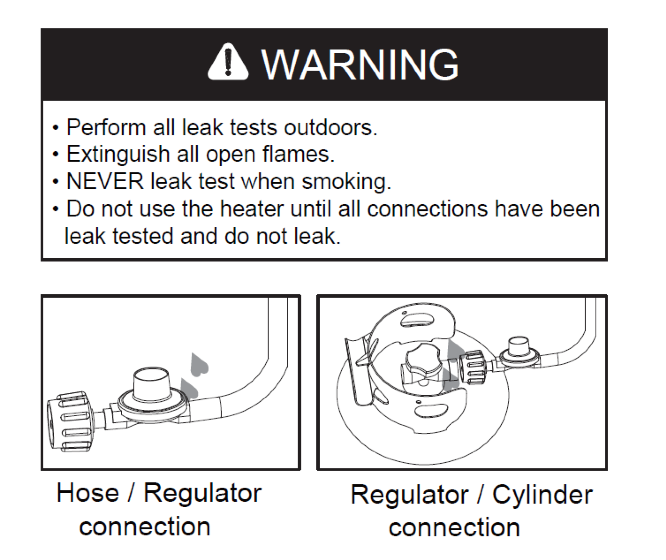
- Apply solution where hose attaches to regulator.
- Apply solution where regulator connects to cylinder.
- Turn cylinder valves ON.
Note: If bubbles appear at any connections, there is a leak.
- Turn cylinder valve OFF
- If leak is at the hose/regulator connection: tighten connection and perform another leak test. If bubbles continue appearing, replace the hose and reperform the leak test. See Figure 1.
- If leak is at regulator/cylinder valve connection: disconnect, reconnect and perform another leak test. If you continue to see bubbles after several attempts, cylinder valve is defective replace the cylinder valve.
- Whenever gas connections are loosened or removed, maintenance must perform a complete leak test at all fittings.
Operating Instructions
Lighting:
- Turn on the valve on the gas cylinder.
- Press and turn the control knob to HIGH (maximum) position (counter-clockwise 90º). (Figure 2)
- Holding down the control knob, press the igniter button several times until the main flame is ignited. Release the control knob 10 seconds after the ignition.
- Turn the control knob to LOW (minimum) and leave it there for 5 minutes or more. before turning the knob to the desired temperature setting. (Figure 3)
- If the burner flame goes out, turn off the heater and wait at least 5 minutes or more to let the gas dissipate before re-lighting to avoid gas explosion. Repeat steps 2 to 4.
- While in use, heaters cannot be left unattended.
- Observe flame. See Figure 4. If the flame is greater than 2 inches, turn off the unit and notify 1Call.
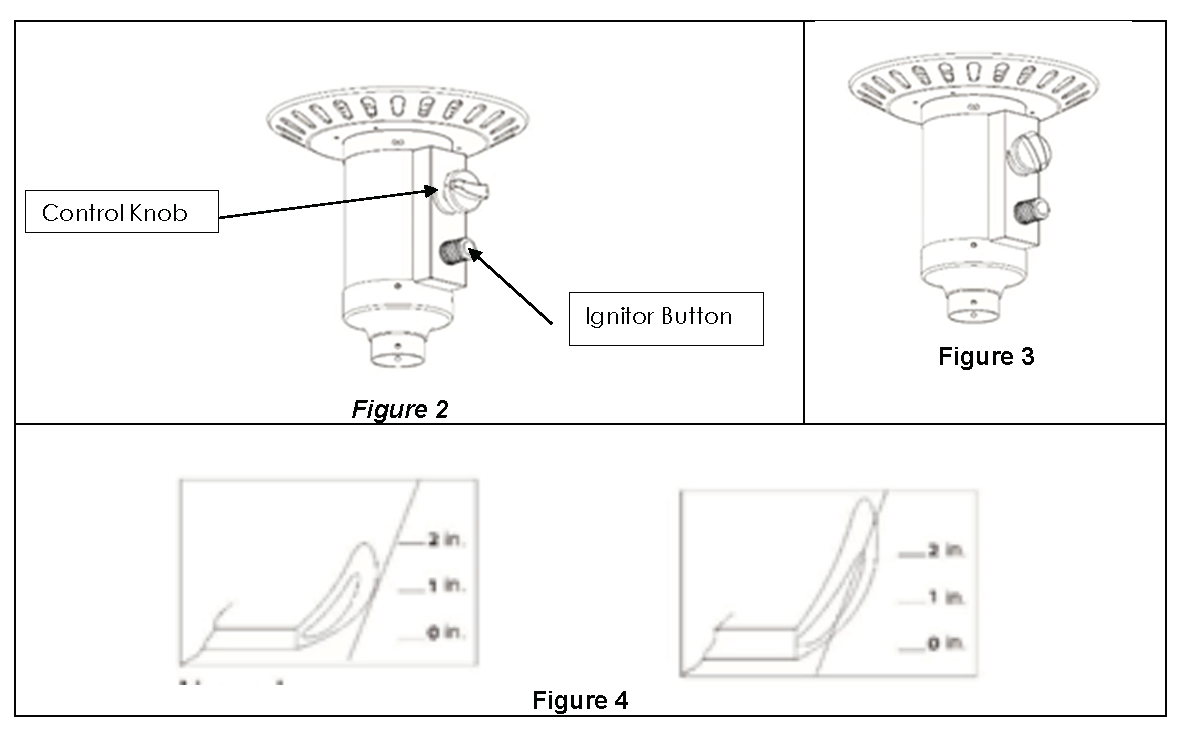
Note: When Heater is ON: Emitter screen will become bright red due to intense heat. The color is more visible at night. Burner will display tongues of blue and yellow flame. These flames should not be yellow or produce thick black smoke which indicates an obstruction of airflow through the burners. The flame should be blue with straight yellow tops. If excessive yellow flame is seen, turn off heater and consult “Troubleshooting” on page 18 of the user manual available from 1Call.
Relighting: 1. Turn control knob to OFF. 2. Repeat the “Lighting” steps above.
Tank Fill Sheet
| Tank # | Filled Date | Filled Weight |
| 11-25-20 | 35.75 | |
| Starting Tank Weight | Used Date | Ending Weight |